
01 / Working principle
Separate curved rotation from planar movement.
A spherical bearing is commonly explained as an assembly in which rotation is accommodated at a curved interface while translation and restraint are handled through the selected arrangement. This distinction is valuable because a request for a high-rotation support does not automatically define how translation must be controlled, which horizontal actions must be transferred or how the bearing will connect to the structure.
The RFQ should therefore describe rotation about the relevant axes alongside translation in the local longitudinal and transverse directions. It should also state whether those effects can occur concurrently, whether movement reverses, and whether the support has unusual actions such as uplift, exceptional loading or staged construction conditions. These questions make the difference between a conceptual product family discussion and a usable technical review.
A schematic or product photograph can help a buyer recognise the broad interfaces, but it cannot establish an allowable angle, travel, duty cycle, material selection, capacity, code compliance or final connection detail. The approved action schedule, configuration and current controlled project documents determine those items.
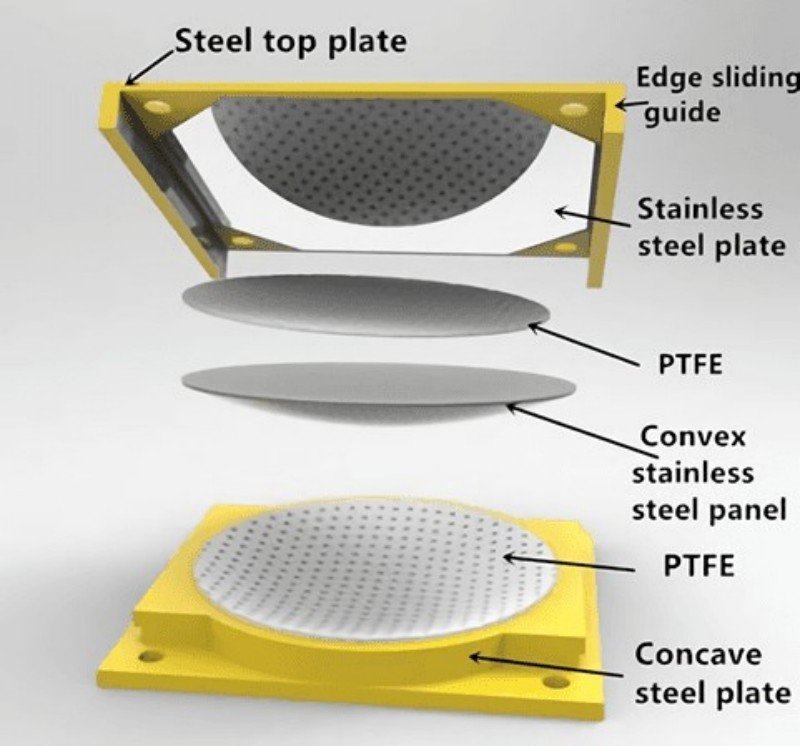
Curved rotational interface
The curved interface is the part of the broad mechanism that accommodates rotation. The actual geometry and design checks remain configuration-specific.
Planar movement interface
Where translation is required, its movement path and duty should be stated separately from the curved rotational interface.
Guide or restraint features
Guides and restraint details give a fixed, guided or free arrangement its project meaning. Their orientation must follow the local drawing axes.
Support and connection interfaces
The top and bottom interfaces connect a bearing mechanism to the superstructure and substructure; their geometry and installation constraints belong in the inquiry.
02 / Functional configuration
Fixed, guided and free describe behaviour by axis.
A spherical mechanism can sit within different movement arrangements. A fixed arrangement is a statement about intended restraint and the required horizontal-action path. A guided arrangement permits the movement direction shown on the bearing layout while restraining the perpendicular direction. A free arrangement still needs a defined movement envelope, protection and interface discussion. The function must be read with the bridge coordinate system, not inferred from the visible bearing shape.
Where a bridge is curved, skewed or staged, a simplified site description can be misleading. Provide the drawing reference, local axes, position identifier and guide direction shown by the engineer. If there is a separate key, pin, stop or other restraint element outside the bearing scope, identify it clearly so the technical review does not assume a load path that belongs to another part of the structure.
Use the drawing’s local axis convention. Fixed, guided and free are behavioural descriptions, not a substitute for the action and movement schedule.
| Function | Intended movement question | Restraint question | What the RFQ must show |
|---|---|---|---|
| Fixed | No intended translation at the bearing location within the declared project condition. | Horizontal action transfer and any external restraint components need a defined path. | Local axes, longitudinal/transverse actions, uplift if applicable, support interface and the bearing’s structural location. |
| Guided | Translation occurs only along the project’s declared guide axis. | The perpendicular direction is restrained through the selected project arrangement. | Guide orientation, movement range/reversals, horizontal actions, clearances, geometry and construction-stage position. |
| Free sliding | Translation is described by the project movement envelope rather than a generic family label. | Other elements may establish the wider structural restraint strategy. | Movement axes, simultaneous rotation/action, interface exposure, travel space, drainage/protection and inspection access. |
03 / Interface and duty
The available envelope and service environment change the questions.
For a new structure, the project team should share the available plan area, height, top and bottom connection concept, elevations, clearances and expected construction sequence. For a replacement, the existing support survey, accessible jacking space, nearby diaphragms or reinforcement, drainage condition and removal route may be equally important. A bearing that has the right broad operating principle can still be difficult to coordinate if the support interface has not been described.
The exposure and service context should be stated without turning it into a generic material claim. Consider water, contaminants, marine or de-icing environment, inspection access, maintenance expectations and any required protection or documentation. The correct question is what the project requires and how it will be verified, rather than whether a product photograph appears suitable for that environment.
04 / Technical RFQ
Supply the envelope, not only the vertical reaction.
A vertical reaction by itself says little about the interaction of a spherical bearing with the bridge. An effective inquiry identifies maximum and minimum actions when relevant, horizontal actions, translations by axis, rotations, the required function, available space, support geometry, temperature/exposure context, standard or owner requirements, inspection evidence and delivery schedule. It also identifies whether a detail is preliminary or approved.
For early-stage projects, a bearing schedule and support plan are often enough to start a focused conversation. For complex or replacement work, add photographs, survey dimensions, existing bearing identification, jacking/temporary-works questions and access constraints. These documents do not transfer final design responsibility; they make it possible to identify what needs to be resolved before a drawing and quotation are compared.
| Item | Why it matters | Confirm in the inquiry |
|---|---|---|
| Concurrent action envelope | Rotation, translation and reactions need to be reviewed in the relevant combinations. | Vertical/horizontal actions, minimum reactions where relevant, uplift, service/ultimate/exceptional cases and the applicable load basis. |
| Rotation and translation | Curved rotation and planar movement are separate aspects of the mechanism. | Rotation axes, translation in each axis, reversals, irreversible effects and whether effects occur together. |
| Function and restraint intent | Fixed, guided and free need a structural meaning, not a generic product label. | Bearing schedule position, guide direction, local axes, separate keys/pins/stops and horizontal-action responsibility. |
| Envelope and connections | Support dimensions and connection details may control the feasible arrangement. | Plan/height envelope, levels, support condition, connection/anchorage concept, clearances, tolerances and replacement access. |
| Environment and evidence | Duty and document requirements shape the review and supply definition. | Exposure, contamination/water risk, standard/specification, requested drawings/records/testing and delivery sequence. |
If part of the data is not yet known
Upload the current drawing, bearing schedule, reaction table or site photos and identify the open items. The purpose of the first review is to clarify missing project inputs—not to treat an assumed value as final design data.
05 / Procurement clarity
What is included in a quotation should be visible in the quotation.
The rows below are a practical comparison framework. They do not state that every item is supplied in every project; the relevant supply boundary must be confirmed against the approved drawings, specification and commercial offer.
| Item | Why it matters | Confirm in the inquiry |
|---|---|---|
| Bearing assembly | Identifies the requested fixed, guided or free project configuration. | Schedule reference, configuration assumptions, marking and approved drawing route. |
| Rotational and movement interfaces | These interfaces are central to the requested mechanism and function. | Declared rotation/movement conditions, configuration scope, protection and any guide details. |
| Connection/anchorage interfaces | Visible plates and fixing items should not be assumed to be in every scope. | Inclusion, responsibility for embedded or site-side elements, geometry and inspection/drawing requirements. |
| Protection and records | Environment and procurement evidence must be compared with the same basis. | Exposure requirements, material/protection scope, inspection points, document types and release route. |
| Packing and delivery | Support assemblies need identifiable, traceable delivery packaging. | Unit marking, packing list, delivery sequencing, shipment terms and project-specific handling-document route. |
Why quotations differ
Compare the same project definition before comparing price.
| Item | Why it matters | Confirm in the inquiry |
|---|---|---|
| Action and configuration basis | A different action envelope or restraint function is not a like-for-like offer. | Compare stated actions, combinations, fixed/guided/free function and axes. |
| Rotation, movement and interfaces | Changes in the movement/rotation envelope and available geometry alter coordination. | Use one drawing revision and compare travel, rotations, elevations, footprint and connection assumptions. |
| Protection and duty context | Exposure and requested service context may change the scope of materials/protection/documentation. | Compare the specified environment, exclusions and verification requirements. |
| Quality/document scope | Data sheets, drawings, inspections and release records are commercial scope as well as technical evidence. | List exactly which documents, checks, witnesses and revisions are included. |
| Quantity and logistics | Marking, packing and delivery obligations must match the actual project release plan. | Compare quantity, split deliveries, packing, shipping terms and responsibility for site-side actions. |
06 / Release readiness
Before production, then before delivery.
Controlled product information follows the project’s own approval path. These lists make the required conversations visible; they are not an installation method or release instruction.
Before production
- Bearing position, identifier and local-axis orientation
- Rotation and translation envelope with declared function
- Guide direction and any separate restraint/interface information
- Support elevations, footprint, connection and clearance details
- Exposure/protection and quality/document requirements
- Inspection, drawing approval, package marking and delivery sequence
Before delivery
- Bearing schedule reference matched to the physical unit marking
- Packing list, configuration identification and package sequence confirmed
- Controlled drawing/document revision matched to the delivery scope
- Agreed protection of relevant interfaces and finishes confirmed
- Project-specific route for lifting, restraint, storage and installation information available to the responsible parties
Visual evidence
Product images that answer different questions.
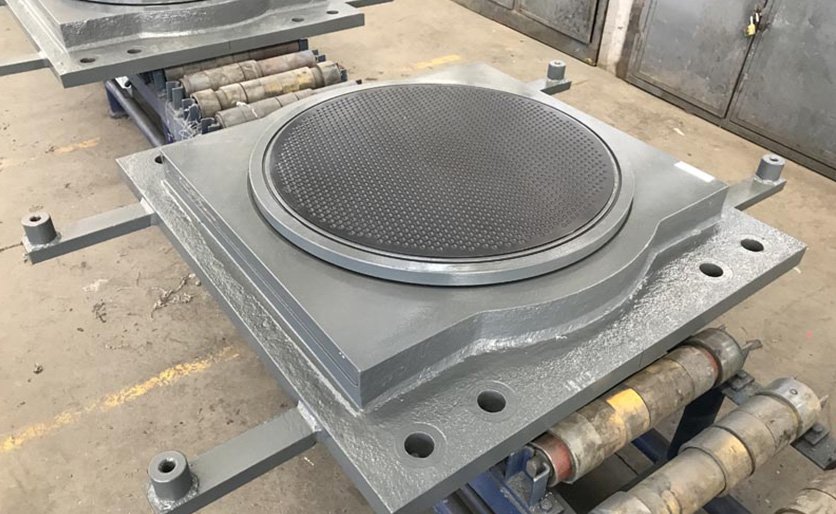
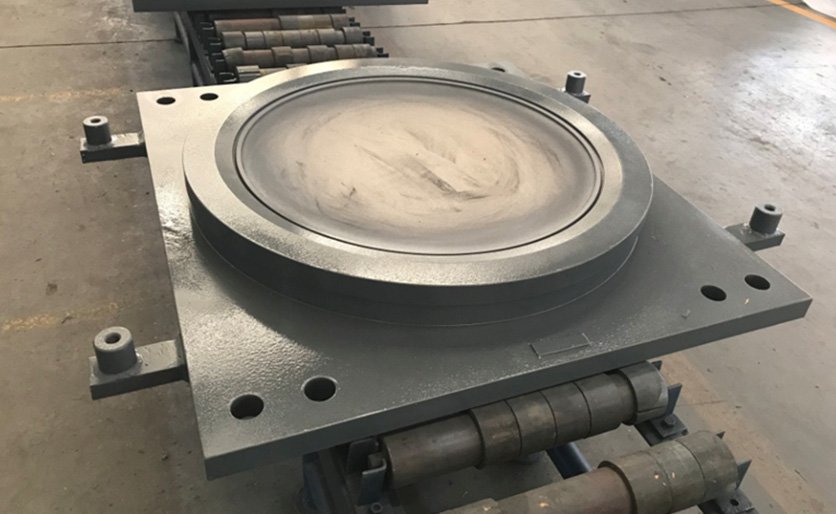
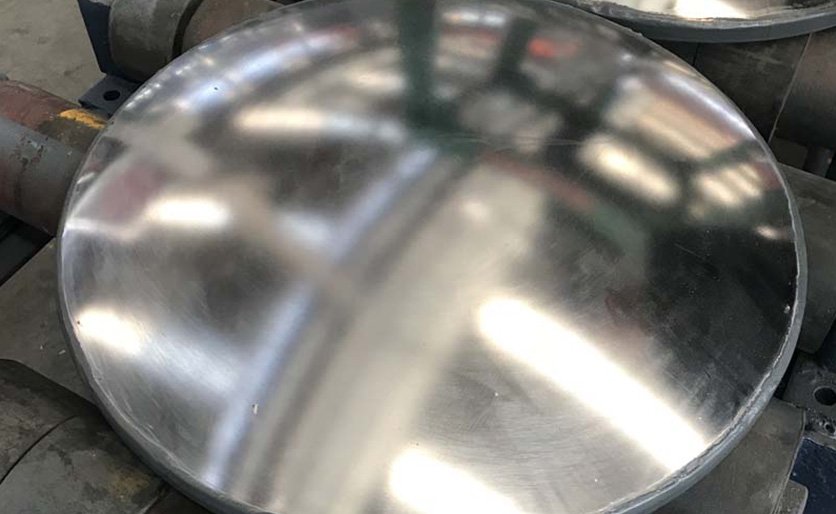
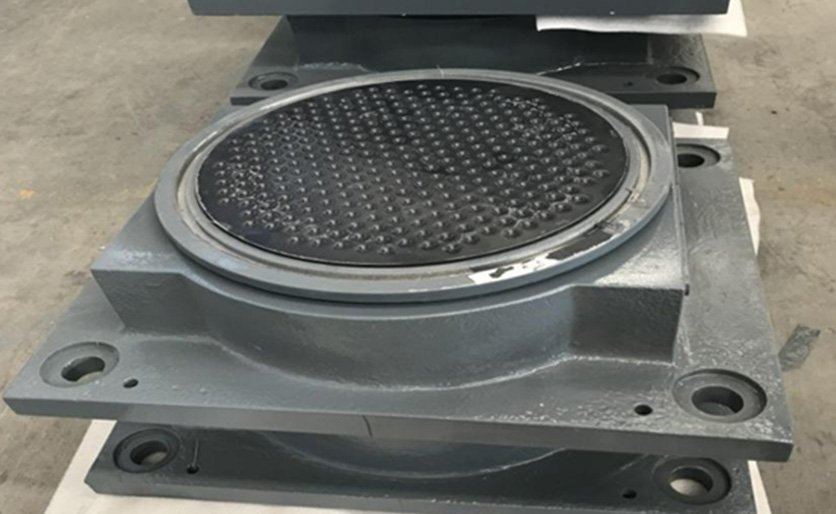
Product photographs, context images and explanatory illustrations have separate jobs. Captions state what is visible and what still needs project confirmation.
07 / Procurement FAQ
Spherical Bearings: questions a customer should be able to answer before release.
Are spherical bearings selected only because a project has rotation?
No. Rotation is an important input, but the review also needs translations, restraint intent, horizontal actions, space, support interfaces, exposure, service duty and project documentation.
Why is rotation described separately from translation?
They occur at different functional interfaces and are checked against different project inputs. A clear RFQ states both by axis and identifies relevant simultaneous conditions.
What is a guided spherical bearing?
It is a project function that allows the declared movement axis while restraining the perpendicular direction. The drawing must state orientation, travel and the horizontal-action context.
Can a photo confirm a bearing’s capacity or compliance?
No. A photo can identify visible form or condition. Capacity, configuration, approval and compliance must be established from the approved design basis and controlled records.
What matters for replacement work?
Start with existing bearing identification, survey dimensions, condition evidence, actions/movements, support interfaces, access, jacking or temporary-works questions, approvals and work-window constraints.
What should be compared across quotations?
Compare the same action envelope, function, rotation/movement conditions, geometry, protection, inspection/document scope, quantity and delivery responsibilities—not only a headline price.